
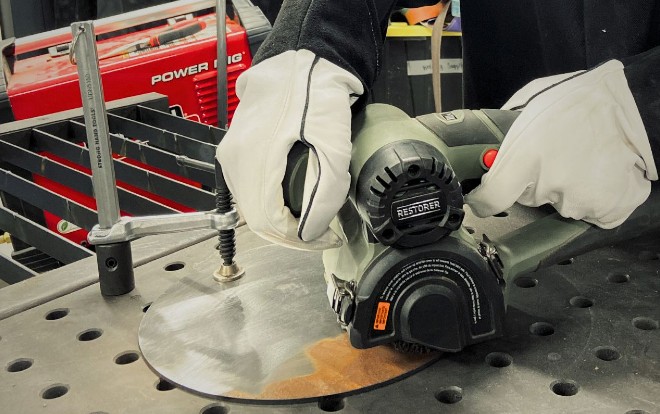
Rust is a common problem that affects metal surfaces, from tools and automotive parts to outdoor furniture and machinery. If left untreated, rust can weaken metal and cause irreversible damage. Fortunately, power tools like the Restorer offer an efficient rust removal and restore metal surfaces to their original condition.
In this comprehensive guide, we’ll explore how to use the Restorer for rust removal, the benefits of this tool, safety precautions, and expert tips for achieving the best results. Whether you’re a DIY enthusiast or a professional, this guide will help you tackle rust effectively.

Why Use a Restorer Drum Sander for Rust Removal?
The Restorer is a versatile power tool designed for stripping paint, smoothing surfaces, and rust removal. Unlike manual sanding methods, this tool saves time and effort while delivering consistent results. Here’s why it’s an excellent choice for rust removal:
1. Efficient and Fast Removal
- The rotating drum with abrasive sleeves or rollers quickly strips away rust without excessive elbow grease.
- Ideal for large surfaces like metal gates, car parts, and machinery.
2. Versatile Applications
- Works on various metals, including steel, iron, and aluminum.
- Can be used on flat, curved, or irregular surfaces.
3. Less Mess Than Chemical Rust Removal
- Unlike liquid rust removers, the drum sander doesn’t require harsh chemicals.
- Produces minimal dust when used with a vacuum attachment.
4. Prepares Metal for Refinishing
- After rust removal, the surface is smooth and ready for priming, painting, or sealing.
How to Use the Restorer Drum Sander for Rust Removal
Tools & Materials Needed
- Restorer Power Tool (corded electric or battery versions available)
- Abrasive sleeves (medium to coarse grit, such as 46 grit rust/paint removal roller and 60-80 grit sandpaper sleeves)
- Safety gear (gloves, goggles, dust mask, hearing protection)
- Vacuum or dust extraction system (optional but recommended, we recommend this Made in the USA Backpack Hepa Vac)
- Wire brush (for hard-to-reach areas)
- Metal primer & paint (for refinishing)
Step-by-Step Rust Removal Process

RESTORER-cordless-WR520DC-tool-backpack-vac-systainer-background
1. Safety First
- Wear safety goggles to protect your eyes from metal particles.
- Use a dust mask or respirator to avoid inhaling rust dust.
- Secure the workpiece in a vise or clamp to prevent movement.
2. Choose the Right Abrasive
- Coarse Roller (46 grit) – Best for heavy rust buildup.
- Coarse Sleeve (60 grit) – Best for heavy rust and initial smoothing.
- Medium Sleeves (80–120 grit) – For moderate rust and smoothing.
- Fine Polishing Rollers (240–400 grit) – For final polishing before refinishing.
3. Attach the Tool to a Power Source
- If using a corded model, plug it into a suitable outlet.
- For battery models, ensure a fully charged battery for optimal results.
4. Begin Sanding the Rusty Surface
- Hold the tool firmly and move it evenly across the surface.
- Apply moderate pressure—let the abrasive do the work.
- Work in small sections to ensure thorough rust removal.
5. Clean the Surface Between Passes
- Use a brush, tack cloth or compressed air to remove loosened rust particles.
- Check for remaining rust spots and repeat sanding if necessary.
6. Smooth the Metal with Finer Grits (Optional)
- Switch to a higher grit abrasive sleeves or rollers mentioned above for a smoother finish.
- This step is crucial if you plan to paint or coat the metal.
7. Wipe Down and Prepare for Refinishing
- Clean the metal with a degreaser or alcohol to remove dust and oils.
- Apply a rust-inhibiting primer before painting to prevent future corrosion.
Tips for Best Results When Using a Restorer for Rust Removal
1. Work in a Well-Ventilated Area
- Rust particles can be harmful if inhaled—use a dust collector or work outdoors.
2. Avoid Overheating the Metal
- Although minimal while using the Restorer, excessive pressure or prolonged sanding in one spot can generate heat.
- Move the sander continuously to prevent warping.
3. Use the Variable Speed Option on your Restorer
- Lower speeds are better for delicate metals, while higher speeds work well on thick rust.
4. Combine with Other Rust Removal Methods for Stubborn Areas
- For deep rust pits, use a wire wheel attachment before sanding.
- Soak severely rusted parts in vinegar or a rust dissolver before sanding.
5. Maintain Your Tool
- Replace worn-out abrasive sleeves or rollers for optimal performance.
- Always maintain a well changed battery for battery powered models

Restorer Drum Sander vs. Other Rust Removal Methods
| Method | Pros | Cons |
| Drum Sander | Fast, efficient, no chemicals | Can be noisy, produces dust |
| Wire Brush/Wheel | Good for tight spaces | Labor-intensive, less consistent |
| Chemical Rust Remover | No physical effort required | Harsh fumes, requires disposal |
| Sandblasting | Extremely effective for heavy rust | Expensive equipment, messy |
For most DIYers, the Restorer Tool strikes the perfect balance between speed, affordability, and effectiveness in rust removal.
Frequently Asked Questions (FAQs)
1. Can I use a drum sander on delicate metals?
Yes, but use a fine-grit abrasive sleeve and lower speed settings to avoid damage.
2. How do I prevent rust from coming back?
After sanding, apply a rust-inhibiting primer and paint or use a protective coating like wax or oil.
3. Is a drum sander better than an angle grinder for rust removal?
A drum sander is more controlled and better for large, flat surfaces, while an angle grinder may be used for edges and corners.
4. Can I use the Restorer on wood?
Yes, but switch to wood-specific abrasive sleeves to avoid damaging the material.
Conclusion
The Restorer Drum Sander is an excellent tool for removing rust from metal surfaces quickly and efficiently. By following the steps outlined in this guide, you can restore rusty tools, car parts, machinery and much more with professional results.
For best performance, always:
✔ Use the right abrasive grit for the job
✔ Wear proper safety gear
✔ Clean and prime the metal after sanding
Whether you’re tackling a small DIY project or a large-scale restoration, the Restorer is a must-have tool for rust removal.
Have you used a Restorer for rust removal? Share your tips in the comments below!